2024: My Year in Reading
I read 19 books in 2024; here are my favorites, recommendations, and thoughts.
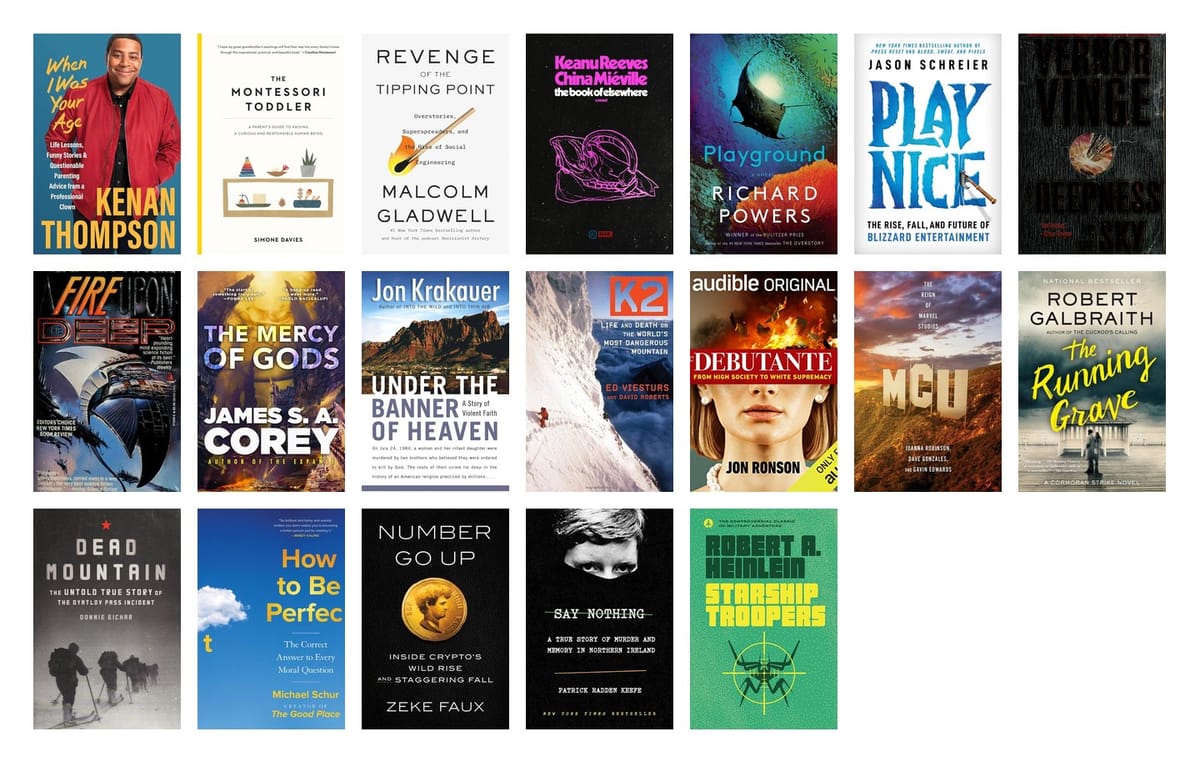
Hello, and welcome to an exceptionally overdue installment of my Year in Reading series for 2024! If you're new here, a quick primer: I love reading, I love writing, I love to write about reading, and I love going back and reflecting on the books I read in the past, so all of this comes together to make a beautiful mess of my personal reflections and perhaps some recommendations that you might find useful in your own reading pursuits.
But first, some stats:
- I read 19 books in 2024 (against my goal of 20), which is down from my five-year average of 23 books per year.
- The books I read in 2024 totaled 7,631 pages, which is down from my five-year average of 9,616 pages per year.
Do I have any thoughts on these stats? No, not really – I simply enjoy tracking this data, and it's interesting seeing patterns and trends emerge (e.g., I definitely read more back when I had a long commute via bus to the office, with some semi-coincidental relevance to not having a young child as well). But really, these stats have neither positive nor negative sway on me; it's just fun having the data, and even though my reading volume is slightly trending down on average, the only thing that matters to me is that I enjoyed the act of reading (which I did, greatly).
As a note: For any of the books I recommend, I'll include a link to the book's Amazon listing. If you purchase a book from these links, I may earn a small referral commission. But if you'd prefer to get your books elsewhere, including from many other wonderful options like your local library, please do!
Learned the most
The books that hold my attention the most are the ones where I learn something new. The topic doesn't seem to matter much (although I've had a particular obsession with medical memoirs and books about mountain climbing) – I think the more unfamiliar I am with the topic, the more it captivates me. Here are a few that stood out this year.
Learned the most: Philosophy edition
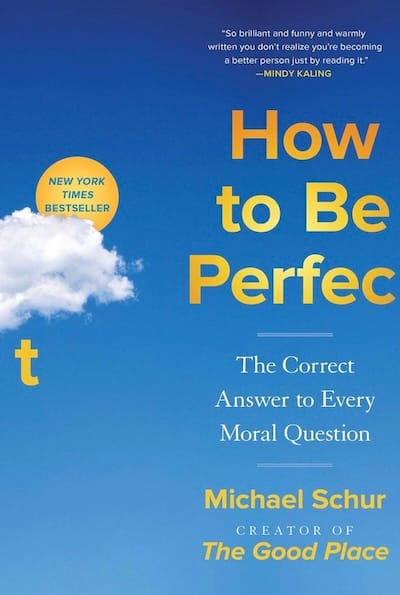
How to Be Perfect: The Correct Answer to Every Moral Question by Michael Schur was such a fun and interesting read, and I found myself smiling frequently while reading it. I already enjoyed Michael Schur's work in television (The Good Place, Parks & Rec, The Office, and as a writer for SNL), and I've had an amateur interest in philosophy (I've done a bunch of reading into Stoicism especially, and a little more breadth-focused stuff with books like The Consolations of Philosophy by Alain de Botton).
The basis for this book stems from when Michael (and later his writing staff) were developing The Good Place (which is very worth watching!), and the result is an exceptionally well-researched and beginner-friendly overview of many popular schools of philosophical thought. Michael's writing is so fun, conversational, funny, and smart – it was just a delight, through-and-through.
This isn't a good book for depth on any one particular topic – I think my Stoic pals only got a few paragraphs, for example – but even though it was a light skim on many topics, it was still dense enough that I think I could use a second read again in the future to capture more of it. I also learned a bunch, and that's probably the most important thing for me in nonfiction.
I'd definitely read this again, and honestly I hope Michael writes another book in the future, regardless of topic. And I'll continue being a person who puts away other people's abandoned shopping carts in parking lots.
Learned the most: Marvel edition
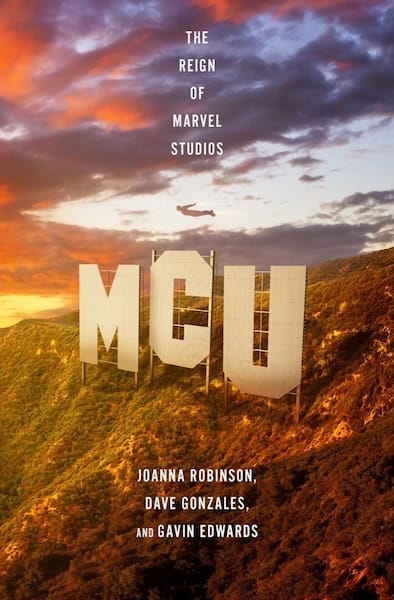
I'm a huge, unapologetic fan of the whole Marvel Cinematic Universe through Phases 1, 2, and 3 (aka the "Infinity Saga"), and I loved hearing about all of the behind-the-scenes stuff in this book. It was fun reminiscing about how I used to eagerly watching post-credit stingers and try to piece together all of the interconnected storylines, and my incessant curiosity was thoroughly itched in learning how these movies were made.
I attempted to watch the corresponding Marvel movies while I read this book, but that quickly fell apart as I got further ahead in the book and increasingly behind in the movies. But hey, I made it to movie #7 (Iron Man 3) before finishing the book – not bad if you ask me – and almost two years later I'm still slowly chipping away at some of the post-Infinity Saga movies that I never saw in theaters.
This book also covered a lot of the history of Marvel as a business, multiple attempts at getting movie franchises off the ground, complex ownership rights (looking at you, Sony's Spider-Man Universe), and several different leaders vying for control over the business.
I'd be up for reading this again. Obviously it has some semi-topical stuff corresponding to the current state of Marvel and the MCU, but in my opinion these movies are fairly timeless and I'll likely continue rewatching the entire Infinity Saga every few years.
Learned the most: Video games edition
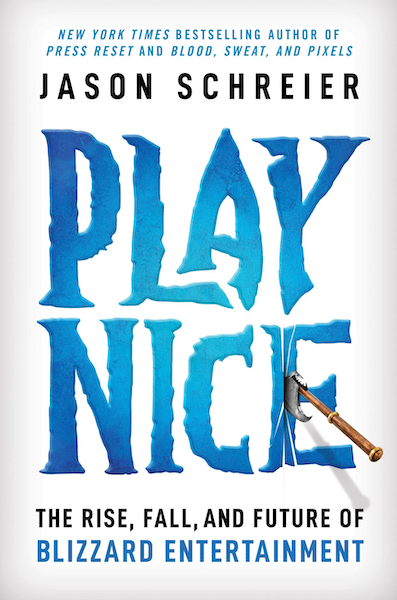
I picked up Play Nice: The Rise, Fall, and Future of Blizzard Entertainment by Jason Schreier without knowing anything about it, nor having any major interest in Blizzard Entertainment, simply because I so thoroughly enjoyed the author's earlier book Blood, Sweat, and Pixels: The Triumphant, Turbulent Stories Behind How Video Games Are Made, which I read on a 2018 binge into the how-video-games-are-made genre along with the excellent Masters of Doom: How Two Guys Created an Empire and Transformed Pop Culture by David Kushner.
While I'm an enthusiastic and lifelong enjoyer of video games, I didn't grow up playing PC games (Nintendo gang represent) and I never paid much attention to Blizzard. Sure, I played a little Starcraft and Warcraft III a bit back in the day at my friends' houses, and I gave Diablo III a try when that first came out, but none of these games captured my attention as much as they apparently did for others. But despite this book not really being aimed at me, I found it absolutely fascinating and tore through it in a little over a week.
Unlike my previous forays reading about the video games industry, nowadays I work at what is ostensibly a video game company (albeit focused on fitness, cycling, and running), which made the anecdotes from this book more interesting than I think they otherwise would have been. And since I have many coworkers who are more traditional game industry veterans, including several from Blizzard, I left with a significant amount of empathy for their experiences, both the highs and the low-lows.
If you're interested in reading about the video games industry, I wouldn't recommend starting here simply because this book is so highly focused on Blizzard – instead I'd recommend starting with Blood, Sweat, and Pixels. But if you're a lifelong Blizzard fan, I think you'll find this book super interesting. And: Leeeeeeroy Jenkins!
Learned the most: Modern financial crimes edition
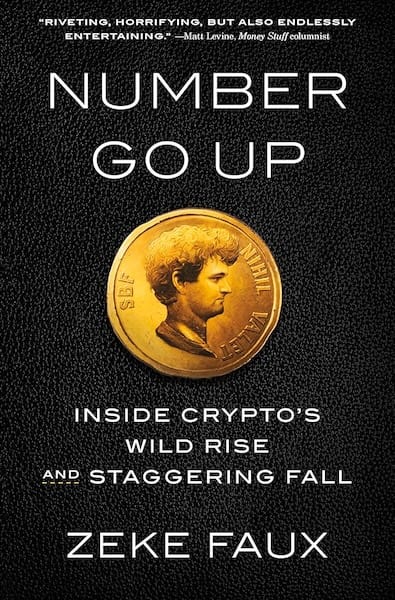
I really enjoyed Number Go Up: Inside Crypto's Wild Rise and Staggering Fall by Zeke Faux. I had a basic, superficial awareness of the big crypto mess of 2022-2023 (which was intentional on my part, as I chose not to follow what for a very long time looked to be a disaster in the making). This was a great way to catch me up on everything, and better: it was written recently enough to include the downfall of Sam Bankman-Fried (aka "SBF") which, had this book been published like 6 months earlier, might have still been cautiously optimistic.
It's easy to feel a lot of schadenfreude when reading this, but hey, these folks were straight-up malicious in many situations (even if they claimed they had grander, noble intentions), so I think that's ok.
While I'm glad I read this book, I probably wouldn't read it again because, given how fast things have changed regarding cryptocurrencies and related policies and regulations, I assume a lot of this book's conclusions will be irrelevant in the next few years. But I'd definitely read more books by this author in the future, and if you found yourself enjoying other books about financial crimes driven by relentless sociopaths like Theranos/Elizabeth Holmes (Bad Blood: Secrets and Lies in a Silicon Valley Startup by Jon Carreyrou), Purdue Pharma/The Sackler family (Empire of Pain: The Secret History of the Sackler Family by Patrick Radden Keefe), or Enron/Fastow-Skilling-Lay (The Smartest Guys in the Room: The Amazing Rise and Scandalous Fall of Enron by Bethany McLean and Peter Elkind), then you'll likely enjoy this one as well.
Back to the mountains
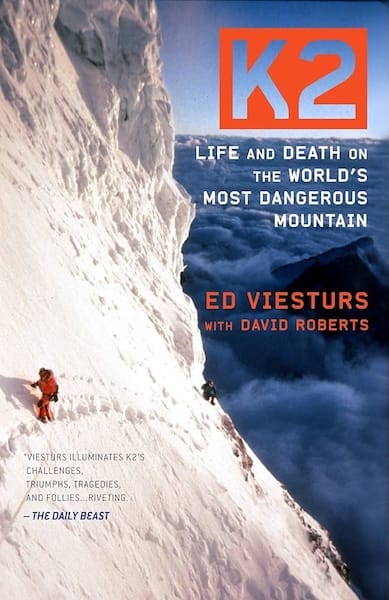
For some reason, I've been somewhat obsessed with books about mountaineering ever since I first read Jon Krakauer's Into Thin Air back in 2011. To be clear, I have no personal interest in sending my own human body up a mountain, but I sure love reading about other people achieving these incredible feats. I guess I'm also just a big fan of Krakauer in general, like past reads Where Men Win Glory: The Odyssey of Pat Tillman and Into the Wild, plus Under the Banner of Heaven: A Story of Violent Faith which I read this year.
K2: Life and Death on the World's Most Dangerous MountainK2: Life and Death on the World's Most Dangerous Mountain was fantastic. Ed Viesturs is a mountaineering legend and he and David Roberts are darn good writers as well. I complemented this year's mountaineering binge by watching Everest (the 1998 IMAX film that Ed Viesturs was featured in) and several other climbing documentaries as well: Meru (2015) (wow!), and Free Solo (2018) (yikes/wow). I plan to check out Ed and David's other book No Shortcuts to the Top: Climbing the World's 14 Highest Peaks some day for sure.
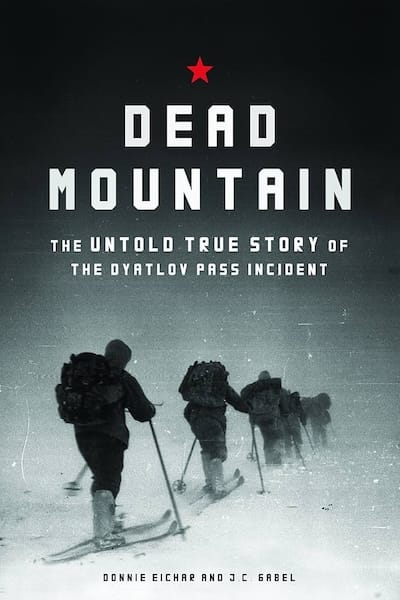
I should also mention that as part of this year's binge into mountaineering, I also checked out Dead Mountain: The Untold True Story of the Dyatlov Pass Incident which had been on my reading list for a while. What made me finally pick it up is that I read somewhere that Issa López was inspired to create True Detective: Night Country (which I very much enjoyed) after she read about the 1950s Dyatlov Pass Incident and listened to Bury a Friend by Billie Eilish. And yeah, I totally get it – this book is definitely the plot basis of Night Country with a little bit of spooky-Billie sprinkled in.
Dead Mountain was interesting: I didn't know anything about the Dyatlov Pass incident, and the author did a bunch of firsthand investigation to dig into it. I won't say much about the findings, since the main reason to read this book (instead of reading a few paragraphs on Wikipedia which is more than sufficient to explain the outcome) is because it's interesting to learn about how the mystery was finally solved after decades of investigation and speculation.
My annual dose of Krakauer
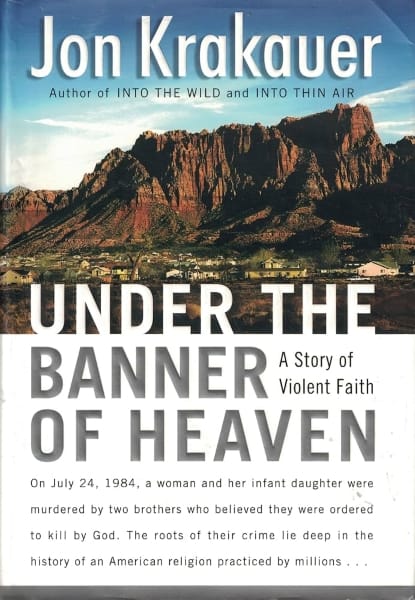
It was no surprise that, after reading about mountaineering and outdoor adventures, I invariably gravitated to another one of Jon Krakauer's books that I hadn't yet read. At this point, he could write a book about the diameter of spaghetti noodles from around the world and I'd eagerly wait in line to buy it on release day.
Under the Banner of Heaven: A Story of Violent Faith wasn't a lighthearted read – it recounts the infamous story of brothers Ron and Dan Lafferty who claimed they received a commandment from God to commit some atrocious murders in the 1980s – but it also gave a deep background on the origins of The Church of Jesus Christ of Latter-day Saints and how fundamentalist groups splintered off to form more extreme sects.
This book very much scratched my itch of "things that I've heard of but know nothing about", and unlike other non-fiction books I've read in the past, I wished this was longer and not shorter. (To be clear: It wasn't too short, but my curiosity was not fully satisfied after finishing it.) My interestingness-o-meter, as measured by how many highlights I made when reading the Kindle version of this book, was quite high at 74 highlights.
There are some very troubling events described in this book, and I'm not just talking about the murders. This isn't to say that any religion is devoid of problematic history, but... I have way too many highlights in this book of examples where LDS/FLDS members were granted revelations from a higher power that certainly were directly beneficial to them, to say the least. Much of this seemed like garden variety selfishness, corruption, and autocracy, just with a few more steps.
After finishing this book and spending countless hours on Wikipedia doing follow-up reading, I checked out the Hulu series Under the Banner of Heaven (2022) which was... fine. It used the Lafferty murders as the primary narrative, and made a good attempt at trying to paint a picture of the history and current state (in the 1980s at least) of the LDS church, but overall I didn't love the show. Nonetheless, it was a good companion piece to the book, and I thought that Andrew Garfield was great in it.
Another great year for science fiction
A Fire Upon the Deep
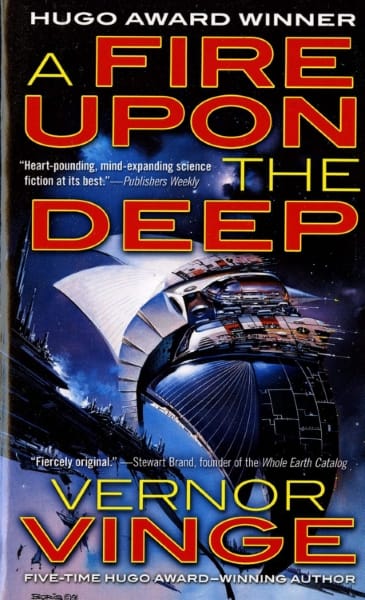
This year I checked out A Fire Upon the Deep, Vernor Vinge's 1992 science fiction novel about what happens in thousands of years when multiple races inhabit the universe. It was great and is exactly the kind of interesting science fiction I love to read. My first instinct was to say that it was super reminiscent of the first two books in the Children of Time series by Adrian Tchaikovsky (which are some of my all-time favorite science fiction books), but the causality is obviously reversed. It also had some good Lost in Space (1998) vibes, or that's at least what my childhood nostalgia tells me.
What I loved the most about A Fire Upon the Deep was its original story, and especially the novel (and thorough!) stuff the author did with the Tines species and their unique pack-based cognition and language.
My biggest critique of this book was that there was an astounding lack of explanation to orient you in this universe and help you understand what the heck was going on. Seriously, I was at least 20% into this book and I still wasn't sure who the characters were, especially with the Tine characters. But thankfully the Wikipedia article for this book was written in a spoiler-free way, so once I read up on who the characters were (or at least their species/etc.), it was way easier to follow from then on.
As the hallmark of any good book, I jumped right to the next book in the series pretty much immediately after finishing this one...
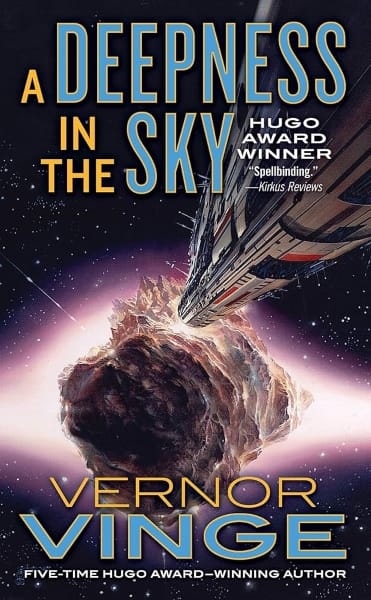
... aaaaand I didn't enjoy the second book in the series as much as the first.
Look, I'm probably off base on this one as I know some other folks who liked A Deepness in the Sky more than the A Fire Upon the Deep. I enjoyed it, but I didn't look forward to reading it like I did with the first one. And, like A Fire Upon the Deep, it gave so little context at the start that I was fairly lost through the first part and had no idea this was a prequel (so, dear reader, now you know this is a prequel!).
The Mercy of Gods
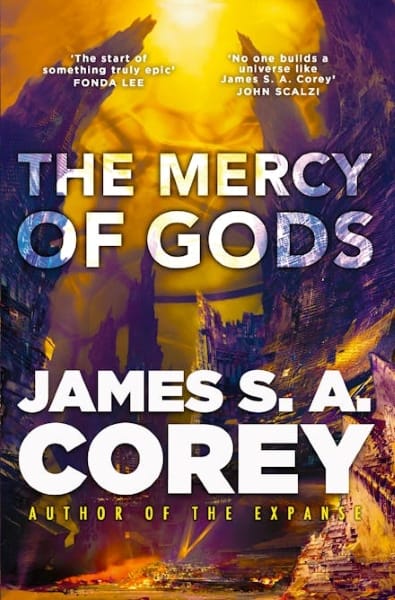
I'm burying the lede here: The Mercy of Gods was one of my absolute favorite books of the year and I couldn't have been more excited to check out the new series from the same guys who wrote my beloved The Expanse series (recounted in my 2014, 2015, 2021, and 2022 reading lists).
The Mercy of Gods is set in the distant future where a non-Earth planet inhabited by humans was suddenly conquered by an alien race, how a small group of survivors struggle to survive under alien rule.
The world-building was awesome, the pace was perfect – my only complaint is that I wish it was longer to give me more story. But really, that's just me saying that I'm excited for more books in this series (and from what I've read, this is intended to be a trilogy).
If you like science fiction, you should check this one out.
Starship Troopers
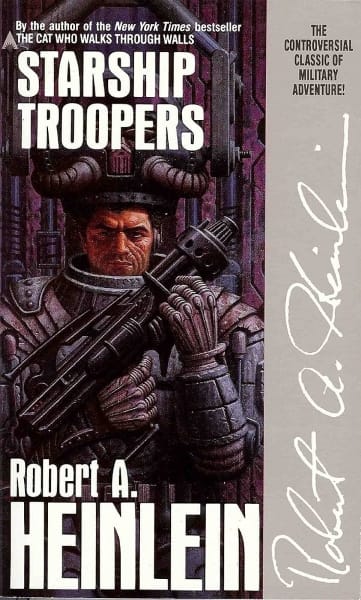
Yep, I'm a so-called nerd who's never seen Starship Troopers (1997) or read the book. Well, I fixed the last part this year.
Starship Troopers was my second time reading Heinlein, with the first being The Moon is a Harsh Mistress which I read in 2014 before I started reliably documenting my Year in Reading. And, like The Moon is a Harsh Mistress, Starship Troopers again reminded me of John Scalzi (ah, but I have that causality reversed again, don't I!).
With only one other Heinlein book under my belt for comparison, I'll say that I enjoyed Starship Troopers more, especially because it was less obtuse about its underlying philosophical allegories. Sure, some of those classroom scenes still got super preachy with what were clearly lectures directly from the author, but if you can choke those down, the rest of the book is pretty darn good.
Revenge of the Gladwell
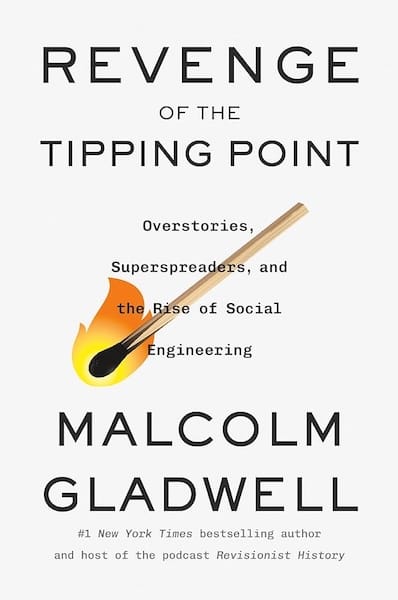
I guess you could call me an apologetic Malcolm Gladwell reader: I've read pretty much everything he's written, and listened to most of his Revisionist History podcast, but I also fully acknowledge the many obvious flaws in his anecdotal storytelling.
With that being said: I enjoyed Revenge of the Tipping Point: Overstories, Superspreaders, and the Rise of Social Engineering just as much as I've enjoyed most of his prior works (which is to say, "a lot") and I burned through this book in a little over a week. I found the original book, The Tipping Point: How Little Things Can Make a Big Difference, to be super interesting when I read it forever ago – his so-called The Law of the Few is still lodged deeply in my brain all these years later – and reading this comprehensive revisitation of similar topics was both interesting in its own right, and I was also especially impressed that he was extremely critical of, and apologized for, his mistakes in his original work as well.
I'd definitely read this again, as I would (and have) with most of his books.
I asked for more Cormoran and I received more Cormoran
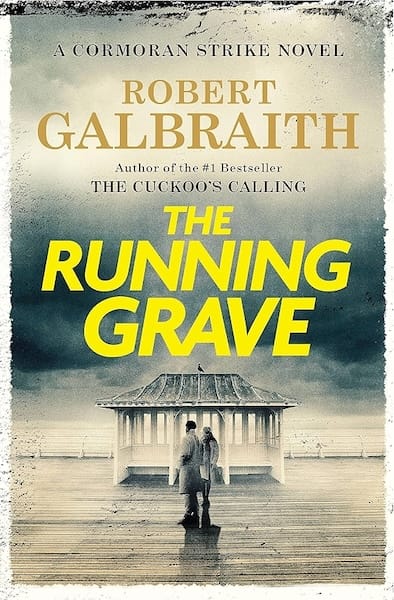
I've been reading the Cormoran Strike detective series for over a decade now, and to quote Evan from Years of Reading past: "Please keep writing more of these" (2014), "un-put-downable" (2015), and "I will probably keep reading the Cormoran Strike detective series forever" (2023).
Well good news, past-Evans: this year we got the seventh installment in the series with The Running Grave.
Unsurprisingly, I enjoyed it just as much (or more?) than all the other books I've read in the series. I won't say much as to not spoil anything, but "Robin infiltrates a cult" was one of the more stressful installments to say the least, and I looked forward to reading it every night.
Amidst the entertainment, this book also permanently burned the intensely motivating quote "Happiness is a choice that requires an effort at times" into my cortex. And the ending? Ahh... finally.
A new SNL memoir
My wife and I are big fans of Saturday Night Live and we probably haven't missed an episode in over a decade (although now that we live on the west coast, it's a Sunday primetime show for us...).
I've read several books about SNL and its various cast members: 2002's Live from New York: An Uncensored History of Saturday Night Live was an interesting and comprehensive oral history, Colin Jost's recent-ish memoir A Very Punchable Face was a delight, as were Tina Fey's Bossypants, Amy Poehler's Yes Please, Rachel Dratch's Girl Walks into a Bar..., and Billy Crystal's Still Foolin' 'Em (oh and if you do check any of those out, go for the audiobooks narrated by the author!). And the posthumous biography of Chris Farley, The Chris Farley Show: A Biography in Three Acts, written by his brother Tom Farley and Tanner Colby, was truly superb and surprisingly insightful about Chris's deep struggles with addiction.
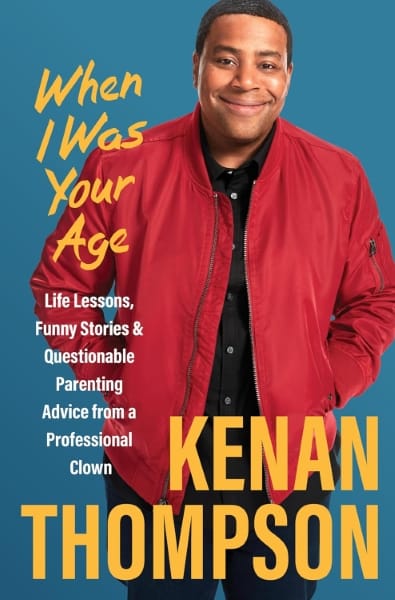
SNL's longest-serving cast member Kenan Thompson recently published his memoir When I Was Your Age: Life Lessons, Funny Stories & Questionable Parenting Advice from a Professional Clown. I've been watching Kenan for a long time (not just because of SNL), going way back to when he was on the Nickelodeon's kids sketch comedy show All That and its spin-offs like Kenan & Kel.
This was an enjoyable memoir and was heartfelt and lighthearted. Kenan isn't the strongest writer (I say this compared to reading other SNL memoirs from writers like Colin Jost), but I appreciated how authentic the writing was. He clearly wasn't comfortable going too deep on some personal topics, which made some chapters end awkwardly and abruptly, but I get it.
Playground
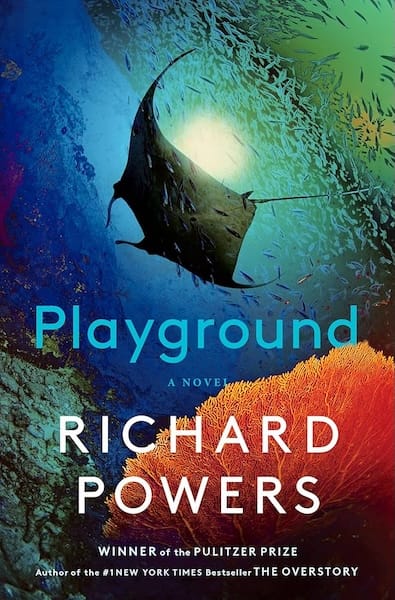
Playground: A Novel was my final read of 2024 and my closing thought after finishing it was "wow" (in a good way).
I had heard of Richard Powers from his Pulitzer Prize-winning previous novel The Overstory (which I haven't read yet, but it's on my list) so I decided to start with Playground instead since it was a new release.
Playground tells four different stories, covering a young diving enthusiast from Montreal, an artist who lives in the remote Pacific, and two young men with remarkably different backgrounds who bond over their shared love over the game Go. Throw in some time jumps, breakthroughs in artificial intelligence, an enduring love of literature, French Polynesia, phosphorus, autonomous cities, and democracy on a remote island, and somehow this was all woven together masterfully into a great book.
I enjoyed the journey of the multiple different storylines, and to keep this review spoiler-free, I'll simply say that the book kept getting better and better as I progressed through it, and I found the ending to be very engaging and thought-provoking. It's likely worth a re-read on the merit of the ending alone.
It feels like we're at some sort of inflection point with AI right now, and I'm eager to see how prescient this book ends up being. (I should note that this book wasn't really majorly focused on AI, but its presence in the story was interesting and – given how things have been going in the past few years – likely very relevant.)
Wouldn't read again
If you've read any of my other posts in my Year in Reading series (or even our silly little five-year dalliance into watching the top 100 highest-rated movies of all time), you've probably noticed that this question of "would I read/watch it again?" is one of my most steadfast barometers of my subjective preferences. Now to be clear, just because I wouldn't read a book again doesn't mean it isn't good or that I didn't enjoy it, but given how many books I have on my To Read list, time is precious and I'll usually pick up a new book instead of re-reading one that I've already read.
So without further ado, here are some of the books that I wouldn't re-read again:
Say Nothing
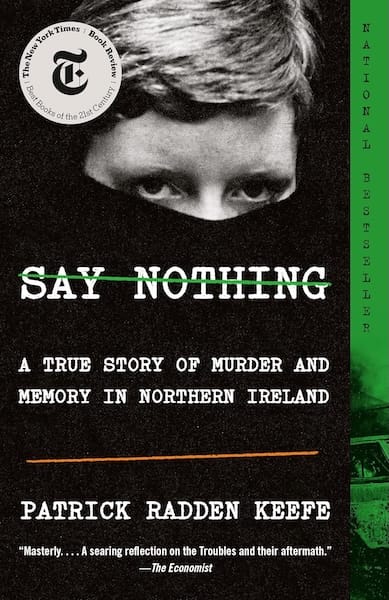
I was eager to read Say Nothing: A True Story of Murder and Memory in Northern Ireland after I read Empire of Pain: The Secret History of the Sackler Family by the same author which blew my socks off and led me into a multi-book reading binge about the modern drug crisis in 2022.
Say Nothing is a non-fiction book that deeply explores Northern Ireland's 30+ year violent conflict, the Troubles, and is built upon dozens of interviews with people who lived through those times.
I have complicated feelings about this book: I respect and appreciate how much work clearly went into this book, and I was looking forward to learn more about the Troubles as it's a topic I knew very little about (aside from my love of The Cranberries). This book was incredibly well-researched, heavily based on interviews with real participants in these events, and likely was the first written source of many of these anecdotes.
But, just as I felt with Lenin's Tomb: The Last Days of the Soviet Empire from my 2023 Year in Reading – another incredibly-well-researched (and Pulitzer Prize winning) book that I sought out to fill in a personal knowledge gap – I just don't enjoy books that are so anecdote-heavy. Say Nothing was a slog for me to get through, I repeatedly considered abandoning it (but I didn't!), and I was eager to move on to something different afterwards.
The Book of Elsewhere
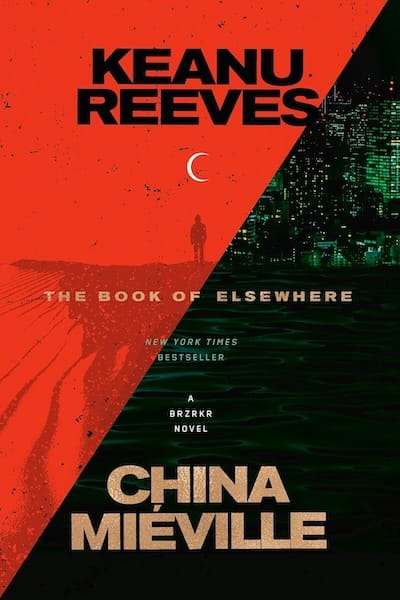
I've been wanting to read China Miéville for a long time (he's won three Arthur C. Clarke Awards!), and I've certainly enjoyed my fair share of Mr. Reeves over the year, so I was very excited to check out The Book of Elsewhere.
I never read Keanu's popular comic book series BRZRKR; The Book of Elsewhere originated from that universe, and Keanu reached out to China Miéville as his dream author to expand the story as a novel. China accepted, Keanu provided an outline, and it sounds like China did the majority of the writing.
The Book of Elsewhere tells the story of a mysterious immortal man named "B" who now, in modern times, wants to end the endless cycle of violence in which he's spent most of his life. It was very, very gory, but if you enjoy violent action movies, I think this is about the closest you'll get to something like that in novel form (albeit with high prose!).
Overall, I didn't love it and wouldn't read it again, but I don't regret reading it. China is clearly a talented writer, but perhaps a little too much at times, as I felt some of the poetic flourishes in this book were distracting and misplaced. The book was an interesting concept and it was fun to imagine what this movie would look like with Keanu (I assume) in the lead role.
Some people are such jerks that it hurts my soul to read about them
I normally love going down genre-rabbit-holes for a few books at a time, so after finishing Number Go Up: Inside Crypto's Wild Rise and Staggering Fall by Zeke Faux, I immediately jumped into The Fund: Ray Dalio, Bridgewater Associates, and the Unraveling of a Wall Street Legend by Rob Copeland, and it was one of the few times I've ever shelved a book at 25% completion without finishing it (seriously, this number is in the single digits).
It's not that there's anything wrong with the book itself – The Fund seemed to be thoroughly and meticulously researched, and usually that's a huge boon for how much I enjoy a book – but man, this subject matter just sucks. Ray Dalio sounds like an absolutely terrible leader, regardless (or perhaps in spite of) of his objective financial successes, and 25% into the book, I finally acknowledged that I was not experiencing any joy in learning more about him or his company. Don't get me wrong, I appreciate a good tale of anti-patterns (because there are few things that teach as well as mistakes!) but Ray's purported behavior as a leader was often so egregious, so horrible, and so naively egocentric that it was exhausting and demoralizing to even read about.
My main takeaway is that Ray, like many self-proclaimed "truth tellers", lacks the empathy to understand the quote from our dear Detective Benoit Blanc: "It's a dangerous thing to mistake speaking without thought for speaking the truth."
So, that was it for The Fund – I'm going to go back to never thinking about Ray Dalio ever again.
That's it for my 2024 reading list highlights. I didn't mention everything I read here, so you can check out my entire 2024 reading list on Goodreads if you want to see more of my reviews and recommendations.
For more posts like this, you should subscribe to my newsletter (it's free!) or check out my previous Year in Reading lists. You can also add me on Goodreads (so I can steal book recommendations from you).